Production forestry
Plantation harvesting
Match felling, processing, extraction and roadside capacity as one system. The slowest stage determines the output you can sell.
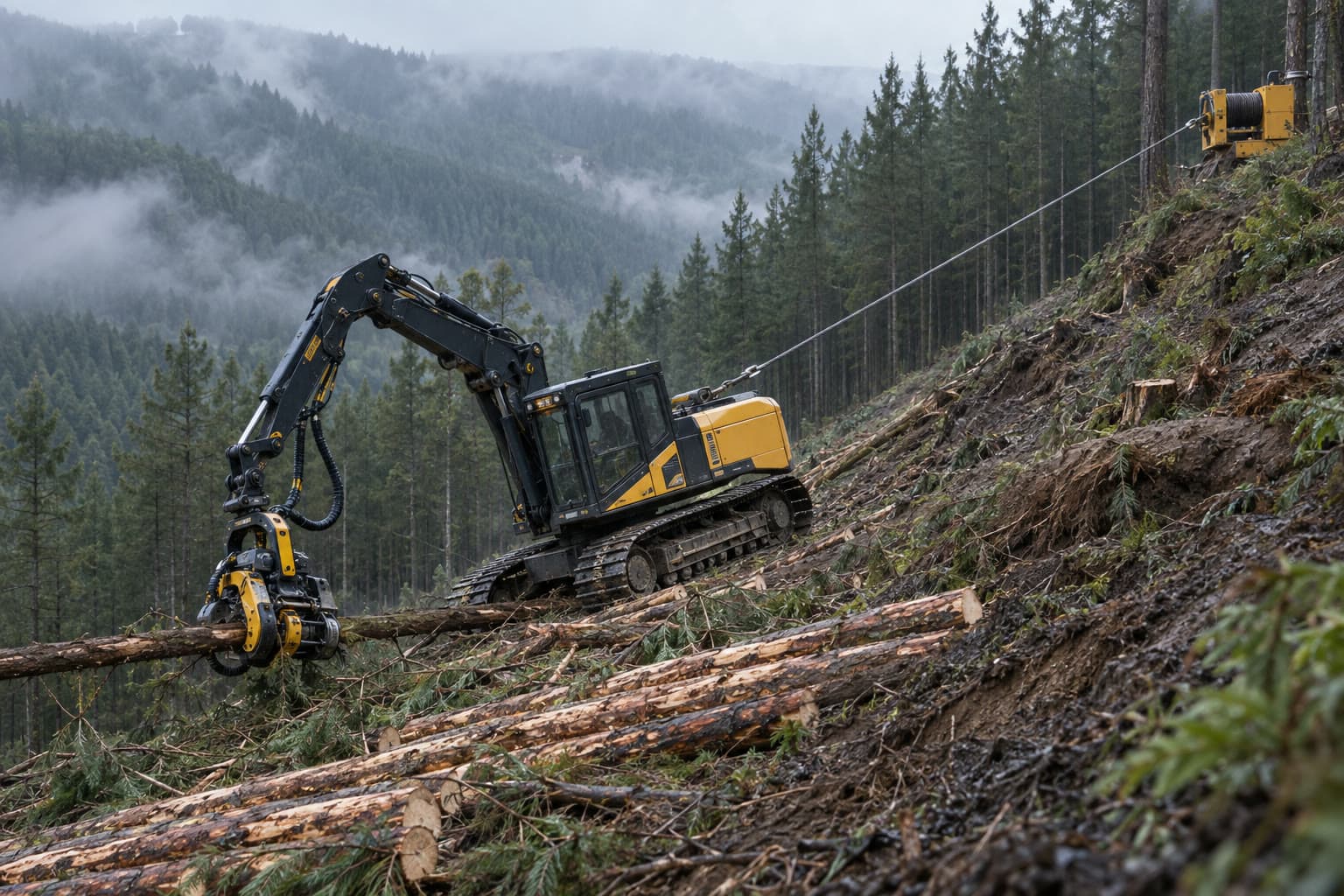
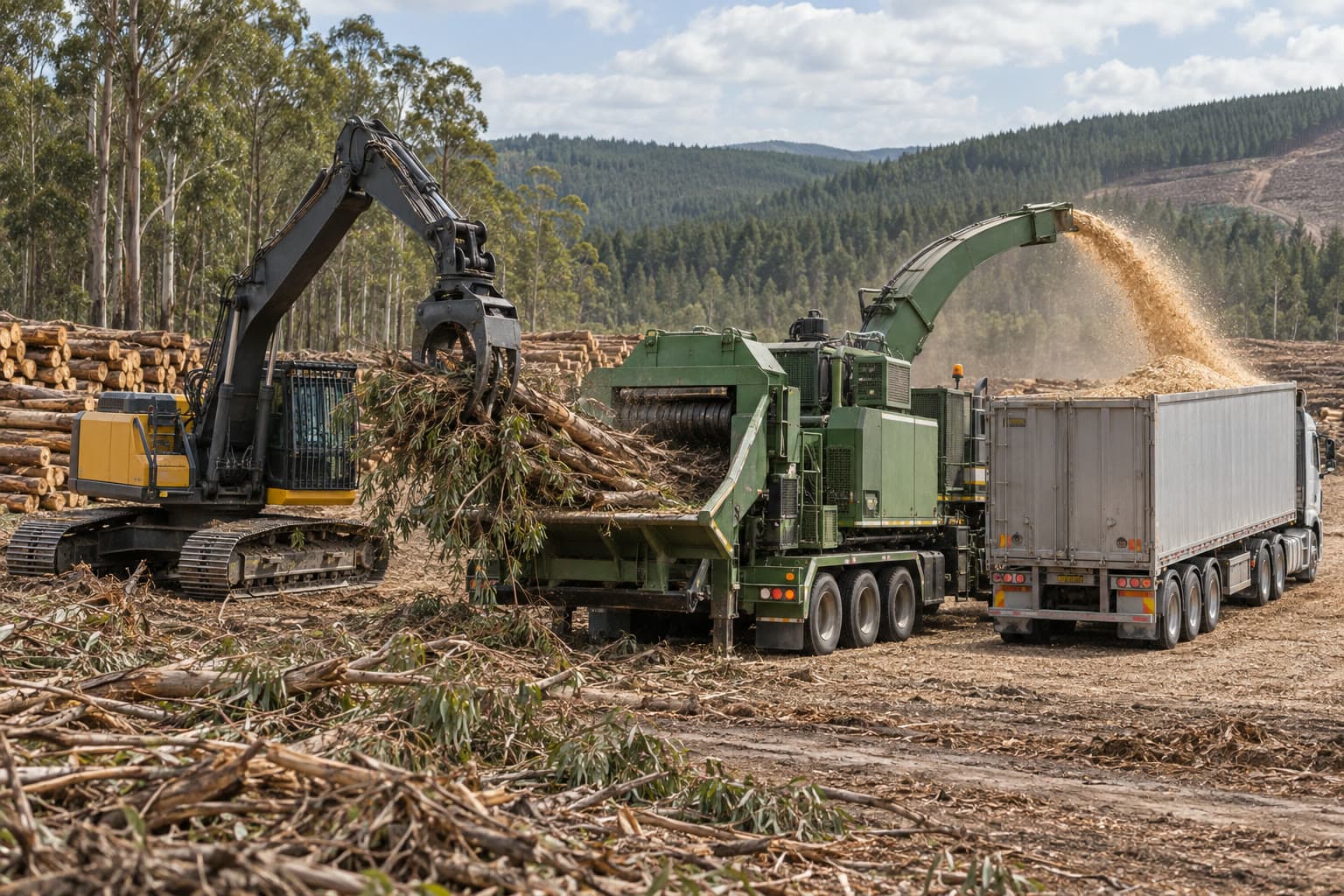
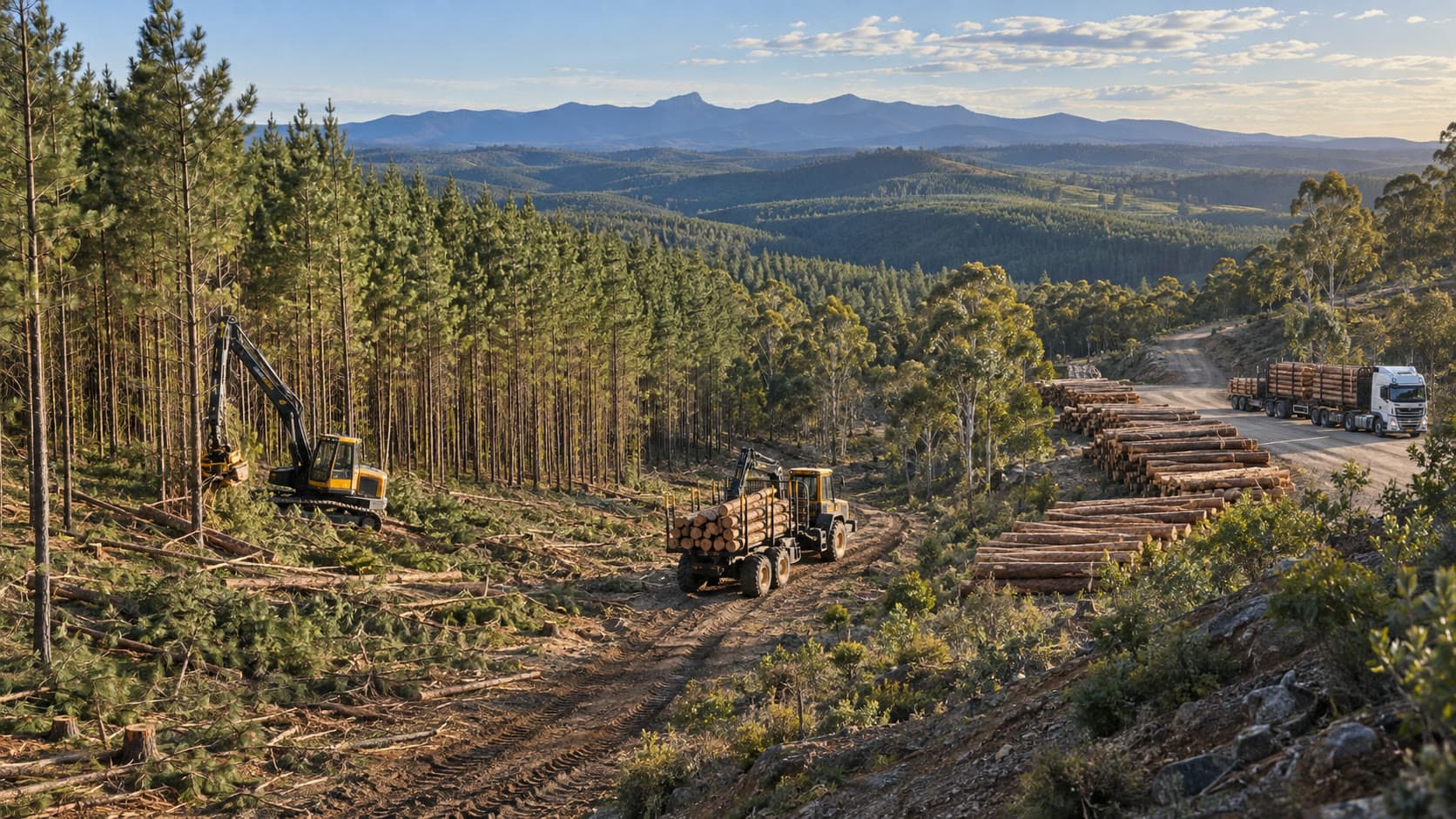
Plantation harvesting is bought as a system, not as a machine. Felling, processing, extraction, sorting and loading each have a sustained hourly capacity, and the one with the lowest capacity sets what the whole chain can sell. Capital spent upstream or downstream of that constraint buys nothing: a faster harvester in front of an under-sized forwarder produces a larger pile at the stump, not more timber at the roadside.
The two variables that move the sum most are extraction distance and landing capacity, and neither appears on a specification sheet. A haul that doubles absorbs forwarder hours without changing the harvester's output, and a landing that cannot be sorted and loaded at the rate timber arrives will stop the chain regardless of what the machines can do. Utilisation is the third: a plantation fleet is only affordable at the hours a contract can actually keep it working, which is why contract length belongs in the purchase decision.
Binding KPI: Cost per saleable cubic metre at roadside