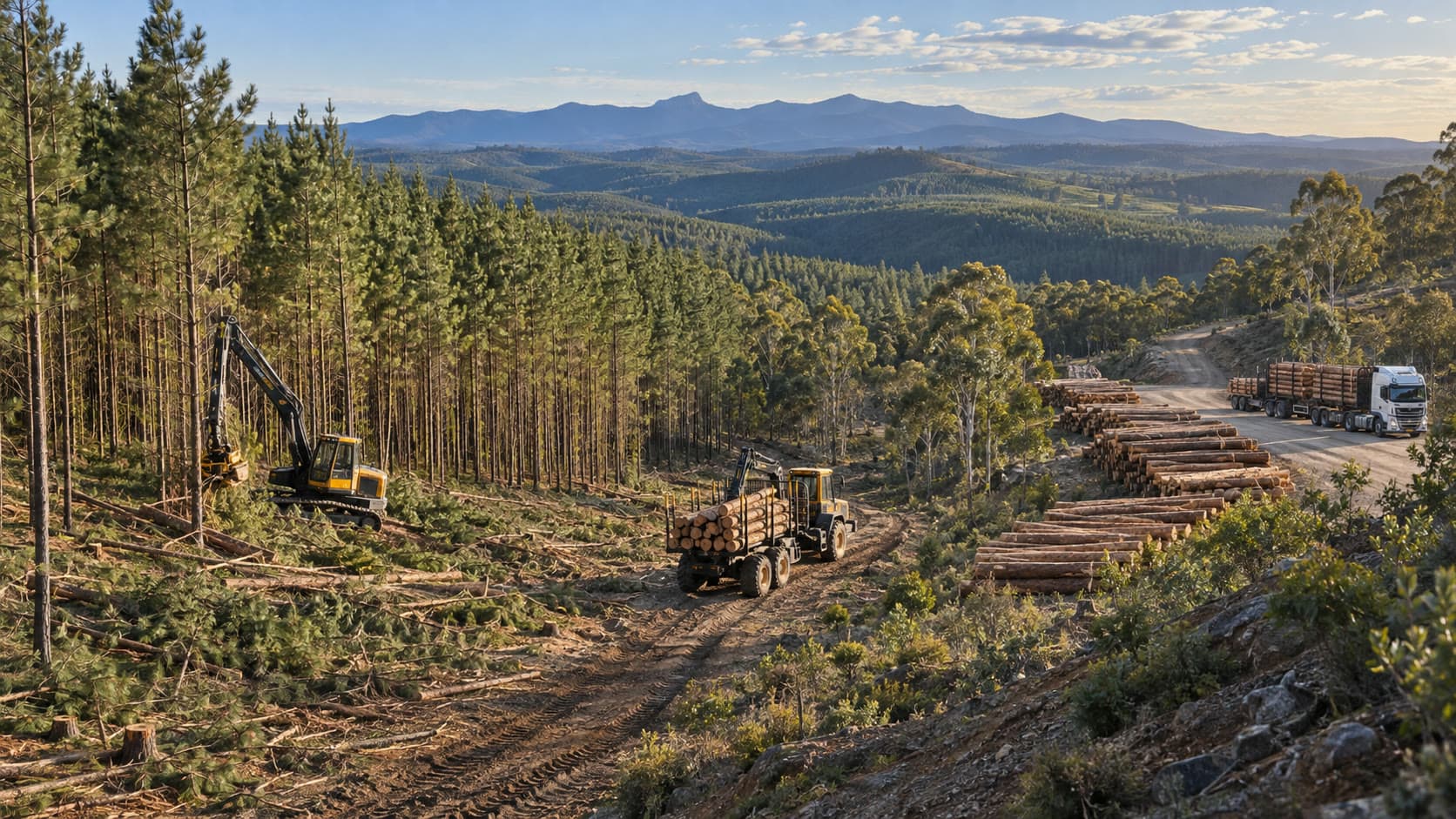
Plantation harvesting is a production system, not a collection of individually impressive machines. The harvest method, stem profile, extraction distance, roadside space, haulage rhythm and product mix determine whether cut-to-length or full-tree equipment will produce the lowest delivered cost.
Start with the saleable assortments and the daily tonnes or cubic metres the haulage plan can remove. Size the felling and extraction stages around that constraint, then test the proposed fleet in representative stems and terrain. A faster harvester creates no commercial value when the forwarder, landing or trucks cannot clear its output.
Plan the operation in sequence
Capacity added to one stage only helps when the next stage can accept it. Resolve the complete material path before comparing models.
Where this system makes sense
Machine classes to investigate
These are starting points. Carrier capacity, support coverage and the production constraint decide the final combination.
Harvesters
Read benchmark specifications, buyer criteria, ownership costs and the traps that change this class in Australian conditions.
Forwarders
Read benchmark specifications, buyer criteria, ownership costs and the traps that change this class in Australian conditions.
Feller bunchers
Read benchmark specifications, buyer criteria, ownership costs and the traps that change this class in Australian conditions.
Skidders
Read benchmark specifications, buyer criteria, ownership costs and the traps that change this class in Australian conditions.
Questions to answer in the field
If these inputs are unknown, the supplier is being asked to size equipment around assumptions.
Measures that should decide the purchase
Measure the unit the contract pays for and the delays that prevent the system producing it.