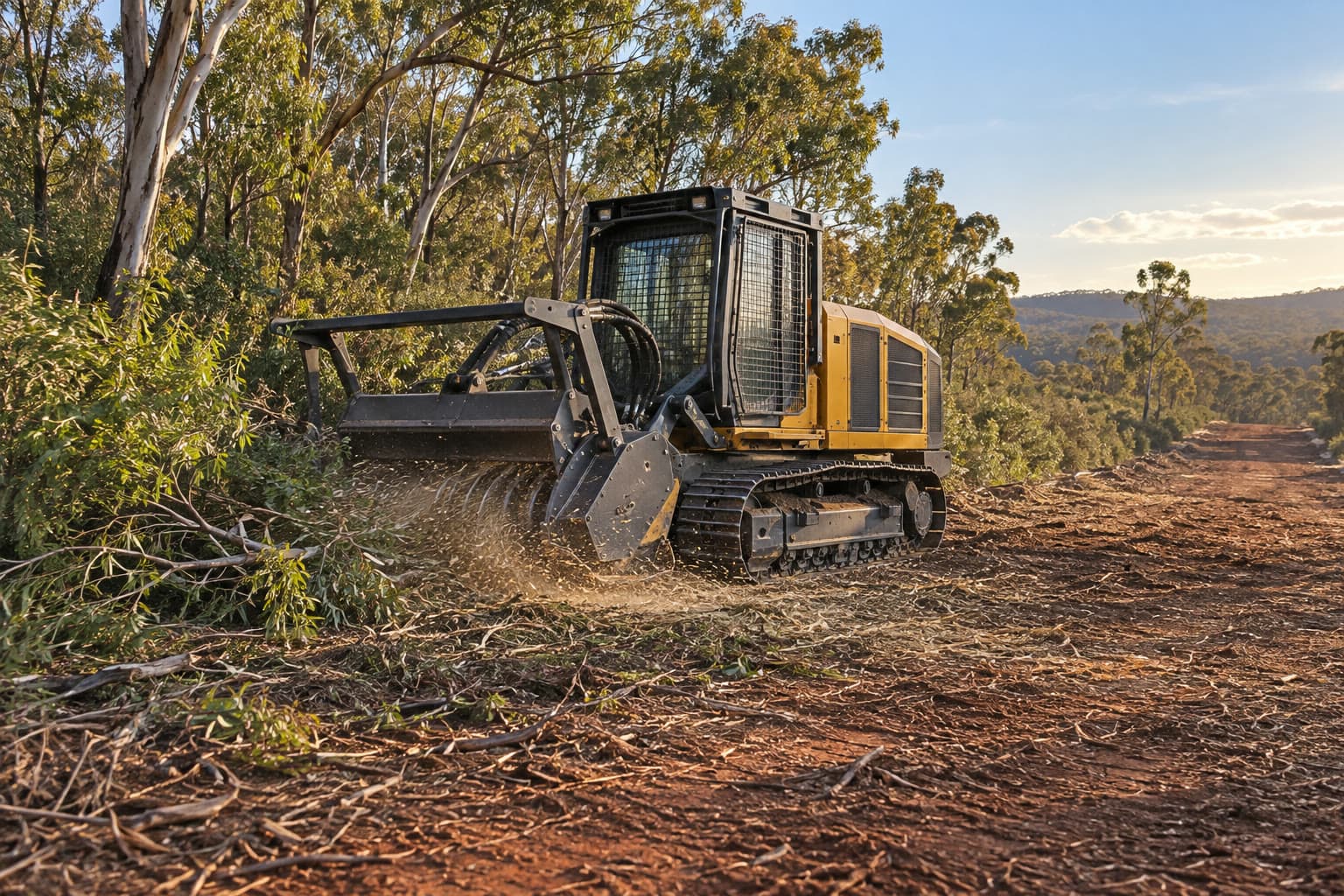
Vegetation and land-clearing work should be specified by the finished site condition. Selective removal, in-place mulching, whole-tree recovery, stump extraction and cultivation are different production systems even when they begin with similar vegetation.
Survey stem density, diameter distribution, species, rock, slope, access, contamination and disposal constraints before selecting a tool. The profitable machine is the one that reaches the contract standard with the fewest passes and the lowest combined mobilisation, wear and rework cost.
Plan the operation in sequence
Capacity added to one stage only helps when the next stage can accept it. Resolve the complete material path before comparing models.
Where this system makes sense
Machine classes to investigate
These are starting points. Carrier capacity, support coverage and the production constraint decide the final combination.
Forestry mulchers
Read benchmark specifications, buyer criteria, ownership costs and the traps that change this class in Australian conditions.
Tree shears
Read benchmark specifications, buyer criteria, ownership costs and the traps that change this class in Australian conditions.
Grapple saws
Read benchmark specifications, buyer criteria, ownership costs and the traps that change this class in Australian conditions.
Stump shears
Read benchmark specifications, buyer criteria, ownership costs and the traps that change this class in Australian conditions.
Questions to answer in the field
If these inputs are unknown, the supplier is being asked to size equipment around assumptions.
Measures that should decide the purchase
Measure the unit the contract pays for and the delays that prevent the system producing it.